Monday, 24 February 2020

Analysis of the performance of Victor Caibé's Blog (Student Number: 10536556)

Since late January, we, students of the MSC Digital Marketing at the Dublin Business School have been tasked to create a blog and write posts with the topic of the Data in the marketing field.

Today, we will have a look at the traffic results thanks to Google Analytics.
Unfortunately due to technical issues, analytics wasn't working until January 30th.
So the data presented here will start on this date.

In this article, we'll have a look at the basics settings of Google Analytics, in order to understand this blog's traffic from the higher view.

DATE: JANUARY 30TH - FEBRUARY 24TH.

__________________________________


Audience:


User: 21 / Session: 46 / Sessions per user: 2,05 / 

Pages Viewed: 81 / Pages per Session: 1,88 / Average Time Session: 4:05 min / 

Rebound Rate: 53,49% / New Visitors: 60% / Returning Visitors: 40% / 

Languages: English, French and Turkish / Countries: Ireland, France, Turkey / Cities: Dublin, Canterbury, Paris, Naas, Les Pennes-Mirabeau / 

Browser: Google Chrome (90%), Safari / Operating Systems: Mac OS, Windows, Android, iOS.


Acquisition:


Principal traffic canals: Direct (43.7%), Social (40%), Referal (14,3%) 

Users: Direct (16), Social (14), Referal (5)

Rebound Rate: Direct (76,47%), Social (57,89%), Referal (0)

Referal Websites: blogger.com (14), elearning.dbs.ie (5)


We can also notice that there has been a pic of traffic by the middle of February.


Users Behavior


Traffic per page:

1. Homepage: 21 views (25%)
2. Article on AI: 16 views (19,05%)
3. Article on Big Data: 5 (5,95%)


Unique View: 73

Exit: 54,76%


Traffic per Hardware:


Users per Unit: Desktop (17), Mobile (4)

Sessions per Unit: Desktop (38), Mobile (8)

Rebound Rates per Unit: Desktop (50%), Mobile (87,50%)

Session per Unit: Desktop (1,95), Mobile (1,25)

Average session time per Unit: Desktop (4:48), Mobile (0,01)


_________________________________

What we can learn from these data is that first, the average session time is good, people took the time to read at least one article and sometimes comment.
Also, Desktop is the main way people have been consulting the blog.
Even with a high rebound rate, the traffic of the website and the user journey is good !

Overall, a very good and learn full experience!

Sunday, 23 February 2020

AI in Marketing: An essential assistant in the Data era


AI with marketers is like a beautiful romance. One helps one another, both find common grounds to play on. AI is the perfect marketer's assistant.

As we've seen in the previous articles, data are valuable goods for companies. 
But if you can't find a way to treat it properly, it can't be as efficient as it's supposed to be.

Thankfully, Artificial Intelligence has been in the marketing area since the mid-'90s and has reshaped the way ads are displayed and targeted, marketers make their decisions on, and also the customer's journey and experience.

____________________________________________


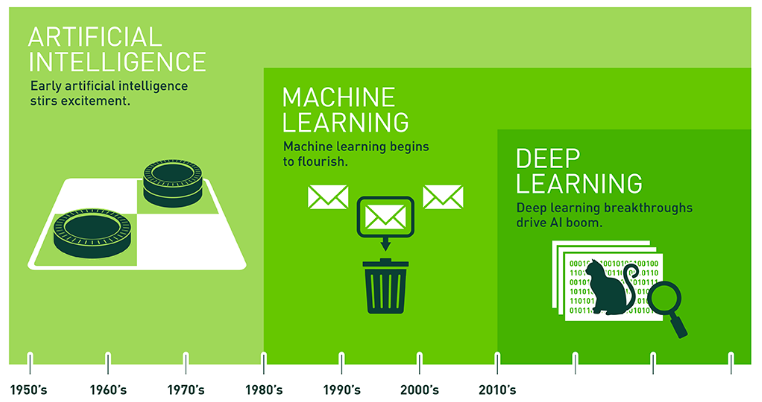
Back in 1956, the term "AI" has first appeared and wasn't really appreciated. This period was called the "AI Winter" and refers to when AI was considered as a foolish invention, full of disappointment and criticism.

With the spreading of the internet and computing power, AI finally made its way as an "Intelligent Agent". A software that could assist professionals, a way to delegate work such as repetitive tasks, summarize complex data...

Technological evolutions allowed AI to evolve too with skills such as voice recognition, natural language processing, machine learning/deep learning, or neural networking.


This had one major consequence: the transition from mass to niche marketing.

Mass marketing serves mass-market, based on the "must-have" product, spread over National TV, Newspapers/Magazines.
But the over-supply of mass-market goods has created an od feeling into customer's minds.

And the internet explosion was the key to this change.
Billions of people sharing their interests and likes online allow access to consumer's data, creating the application of personalized marketing on an unprecedented scale.

People can now receive niche brands and products offer that are relevant to their own personal, cultural and situational requirements that stimulate an emotional response or solve a personal need.
And people are willing to pay more to get products that feel like they were created for them.

Furthermore, it has allowed small businesses to identify their niche customers with precision-targeting, and cost-effective strategies through platforms like Google, Facebook or even Amazon.

Always more relevant, authentic and intimate, AI has become essential for businesses in order to drive success and achieve their objectives, and it will continue to do so, being more efficient years after years.


Sources:

McDowell Marinchak, C., Forrest, E. and Hoanca, B. (2018). The Impact of Artificial Intelligence and Virtual Personal Assistants on Marketing. [online] IGI Global. 
Available at: https://www.igi-global.com/chapter/the-impact-of-artificial-intelligence-and-virtual-personal-assistants-on-marketing/184275

Wikipedia. (n.d.). AI winter. [online] Available at: https://en.wikipedia.org/wiki/AI_winter

Kozyrkov, C. (2018). Are you using the term ‘AI’ incorrectly?. [online] Medium. 
Available at: https://medium.com/hackernoon/are-you-using-the-term-ai-incorrectly-911ac23ab4f5

J. Katz, D. (2018). The End of Mass Marketing: Go Small, or Go Home. [online] BBNTimes. 
Available at: https://www.bbntimes.com/technology/the-end-of-mass-marketing-go-small-or-go-home

Thursday, 20 February 2020

Why customer's data are a windfall for marketers (Benefits and Challenges).


Image result for customers


It's a secret for nobody: Knowledge is power. The more you know about a situation, the more you will be able to answer properly to a problem and achieve your goals.

And it applies perfectly to marketing. It's the golden area for marketers, having the possibility to access habits, trends, behaviors and more about their consumers.

Different types of customer data are collected such as descriptive, quantitativeidentity, qualitative.

Data visualization is also a key tool in order to understand each customer more efficiently.
Using the data available to create data points unable companies to get a bigger, clearer picture of each of them and eventually craft an always better customer journey.


______________________________________________


Benefits:

- Efficiency

- Personalization and Loyalty: by getting valuable data about each customer and understand the needs of each individual, companies are able to propose a more single and unique offer and experience to them. They improve their communication and be more relevant. Rather it's a short, or long term strategy.

- Better strategy and decision making

- Increase credibility and brand perception

- Value

- Driving customers


Challenges:

- Privacy and Ethics

- Data quality: Again here, marketers have to ensure the quality of the data in order to make their campaigns and else more effective and efficient.

- Tools that blocks access to data (Ad Blockers, Walled Gardens like Facebook or Google).

- Creativity

- Security and protection against external attacks

- Maintain trust from customers: since the Cambridge Analytica case with Facebook, people started to be aware of the fact that their data were being traded. Consequences: customers started to get even paranoid and being suspicious regarding the companies they gave information to.


The arrival and use of AI in data marketing and customer data had one major consequence: the beginning of the end for mass marketing, and the explosion of niche marketing. More suitable, more effective, and more cost-effective. But we'll treat this topic in the next article.


Sources:

Saab, C. (2016). The New Age of Customer Loyalty. [online] Leo Burnett. 
Available at: https://leoburnett.com/articles/thinking/the-new-age-of-customer-loyalty/ 

Medium. (2019). The Perfect Consumer (Data) Journey. [online] 
Available at: https://medium.com/@CaratGlobal/the-perfect-consumer-data-journey-54725a1921f9

Kim, L. (2016). You Won't Believe All the Personal Data Facebook Has Collected on You. [online] Inc.com. Available at: https://www.inc.com/larry-kim/you-wont-believe-all-the-personal-data-facebook-has-collected-on-you.html

Medium. (2019). The Case for Sharing Data: Consumers, Quality and Better Brand Decisions. [online] Available at: https://medium.com/ama-marketing-news/the-case-for-sharing-data-consumers-quality-and-better-brand-decisions-fc723ffc923e

Tuesday, 18 February 2020

Values for Big Data in Marketing or how it is important to be efficient in an ocean of information

Towards the years, data has become such an important element in the current world. And not only the marketing area that is now data-driven, but also professions like Finance, or Health.
Its importance never ceases to grow, creating incomes and economic value.

When you think about data (from a company perspective), you collect, every day, tons of information that can be useful later on.


Which means you have to treat each of them with tools such as Artificial Intelligence, Machine Learning or even NLP (Natural Language Processing; a catalyst of the two last ones) to be able to use it for marketing purpose.

Companies through their marketing tactics want to engage consumers, throughout different kinds of campaigns, and take them into the purchase funnel.

______________________________________


It has been shown that 1 out of 3 business leaders don't trust the information they use to make a decision.
Furthermore, the use of poor data costs around 3.1 trillion-dollar to the US economy each year.

For example, back in the early '90s, more than half of the budget allocated to marketing was wasted. 
Fortunately, big data made its way into the marketing landscape since. 
Although, some companies still don't understand how to use it properly.

And it's not only about money, but more the worth/quality of your data. 
Companies could also be mistargeting customers, which could result in a waste of money, time, and even affect their brand image.

But how can we get a better and more accurate understanding of customer's behaviors and preferences? 

What if the information collected, are not relevant? 

Knowing the issue, companies and their marketing department need to be careful about how they use and process it.
The veracity (see this also as the integrity here) of the collected information is a key measurement.

When you collect raw data, it's coming from many different sources, you can't always tell if it is accurate.
A big problem if you want to use it afterward.

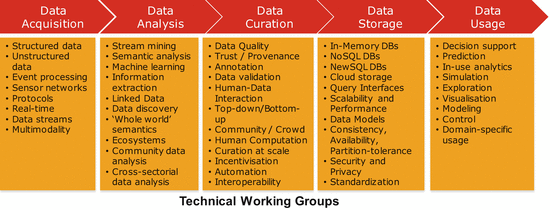
Here's how the process from the collection, to the use of the data, works:


Fig. 3.1


Companies need to have data sets to ensure a certain amount of quality of the data. And also, make sure that they treat the final data regarding their own objectives.

But if the data used is not "clean", the issues can be big. Very big.


Social issues, policy and ethical challenges, wrong decision making, and risks for the credibility of the company... The risks are numerous.


And conversely, the more the data is accurate and efficient, the more valuable it will be and, eventually, allow companies to propose an always greatest offer or experience to their customers.
The use of big data in marketing is paradoxically not only made to create value for the company but for consumers too. It can also help companies to plan long-term strategy by looking at all the data they've gathered over the years 

The value of big data in the marketing field is crucial. Not only for marketing professionals but for any type of area. It helps to have a better understanding of a different kind of situation and gives us a path to follow to make better decisions. 


Sources:

IBM (2014). The Four V's of Big Data. [image] 

Available at: https://www.ibmbigdatahub.com/infographic/four-vs-big-data

Dawar, N. (2016). Use Big Data to Create Value for Customers, Not Just Target Them. [online] Harvard Business Review. Available at: https://hbr.org/2016/08/use-big-data-to-create-value-for-customers-not-just-target-them


Staff, A. (1993). 61% WASTED?: The Wanamaker Rule. [online] Adweek.com. 

Available at: https://www.adweek.com/brand-marketing/61-wasted-wanamaker-rule-38941/

Chua, R. (2019). A simple way to explain extracting more values from NLP. [online] Medium. 

Available at: https://becominghuman.ai/a-simple-way-to-explain-extracting-more-values-from-nlp-de05bd48f78c

Curry E. (2016) The Big Data Value Chain: Definitions, Concepts, and Theoretical Approaches. In: Cavanillas J., Curry E., Wahlster W. (eds) New Horizons for a Data-Driven Economy. Springer, Cham 

Available at: https://link.springer.com/chapter/10.1007%2F978-3-319-21569-3_3

Medium. (2017). How big data can contribute to more efficiency and impact in social policies. [online] 

Available at: https://medium.com/reaffirming-social-values-in-uncertain-times/how-big-data-can-contribute-to-more-efficiency-and-impact-in-social-policies-1cfee2d0728a

Arthur, L. (2017). Big Data Marketing. [E-Book] Google Books. 

Available at: https://books.google.fr/books?id=aSAIAQAAQBAJ&dq=big+data+value+marketing&lr= 

Medium. (2019). How Can We Improve the Quality of Our Data?. [online] 

Available at: https://medium.com/@formulatedby/how-can-we-improve-the-quality-of-our-data-61b55c9063d1

Sunday, 2 February 2020

Let's talk about the three V's.

Because Big data is such a complex environment and subject, it is divided into multiples subdomains.

When it comes to its vocabulary, there's always one topic that should cross your mind immediately. One of the most important that makes you understand how the data proceeds.
A concept called the "3 V's".


First, you might ask, what does this three V's stand for?

Well, they stand for:


  • Volume
  • Velocity
  • Veracity

Let's get into it.
_________________________________________


Volume: 
As enormous amounts of data are known to get collected every day, it shows the complexity of the treatment of it. And it can be VERY big.

For example, it's always easier to take care of one dog (or any other animal, it's up to you), than having to look after 200. Imagine how it would be. 
Like come on, you'd need to be extremely organized. And you could even need some help, be sure of that.

It works exactly the same for big data. The bigger is the number of data collected, the more you will need to create data points in order to classify them and be able to treat it efficiently later.


Velocity:
Not only the data can be big, but it comes in fast. And grow fast too.
This flow of data is extremely useful if you want to have real-time information on your customers for example (location, activity...).

And because a lot of data is coming in (and very fast), you need to protect it from potential cyber-attacks which are unfortunately very common.


Variety:
Big data has something very special: It's incredibly varied. 
Remember the dog example we talked about in volume? Well, imagine that instead of having the same breed for the 200, imagine it's actually 200 different ones.

Data coming from social medias, e-commerce platforms, devices, locations, apps, documents, streaming, videos, images... It's almost infinite.


Sources:

Gewirtz, D. (2018). Volume, velocity, and variety: Understanding the three V's of big data | ZDNet. [online]
Available at: https://www.zdnet.com/article/volume-velocity-and-variety-understanding-the-three-vs-of-big-data/

Flowtraq.com. (2016). The Dangerous "Three Vs" of Big Data - FlowTraq. [online] 
Available at: https://www.flowtraq.com/dangerous-three-vs-big-data/

Thursday, 23 January 2020

What is Big Data ? – The dawn of a virtual reality


As a part of this connected world through our devices, the revolution of Big data is nowadays a big stake of our lives even though some of us might not be aware of it.


___________________________________________________________________


The term refers to a large amount of information collected thanks to different tools.
A huge amount of data sets gathered together and available to an organization characterized by its volume (mostly counted in more than one petabyte), velocity, complexity/variability. 
According to Forbes, 2.5 quintillion bytes of data created every day.

Regarding public data, it exists many data points such as social media, internet browsing, location, purchases and so on.


Big data can be analyzed by using two different techniques:

- The Batch Processing: It is used when the organization have been detaining a large amount of data for a short period of time and proceed it at a certain to get results regarding a question or a situation (for example when a bank wants to analyze all the transactions that have been made during a day or more). This technique takes more time regarding the amount of data proceeded.

- The Steam Processing: It is used when experts want real-time results.
Once the data is collected, directly proceeded, and results are generated.
It is used in some industries as a way to detect frauds.


Data analysis experts can analyze and understand a population behaviors, in order to readjust companies’ strategies, communication, and targeting.
The understanding of these data can result in what we can call a “social mirror” of our society.

And not only big data is used in businesses and advertising, but also in politics, sports, science... Almost every existing areas are concerned.
Which somehow, can be frightening.

Especially when you see cases such as Cambridge Analytica and Facebook.


Everything we do or say - online, as far as we know - is collected. EVERYTHING (almost).


Then, we can ask ourselves: Where all this is going to end?


__________________________________

Sources:

Ippolito, P. (2020). Big Data Analysis: Spark and Hadoop. Medium. 
Available at: https://towardsdatascience.com/big-data-analysis-spark-and-hadoop-a11ba591c057

Looker. (2020). Big Data Definition. Available at: https://looker.com/definitions/big-data

Vaseekaran, G. (2017). Big Data Battle : Batch Processing vs Stream Processing. Medium. 
Available at: https://medium.com/@gowthamy/big-data-battle-batch-processing-vs-stream-processing-5d94600d8103 

-  Lohr, S. (2012). The Age of Big Data. Nytimes.com. 
Available at: https://www.nytimes.com/2012/02/12/sunday-review/big-datas-impact-in-the-world.html